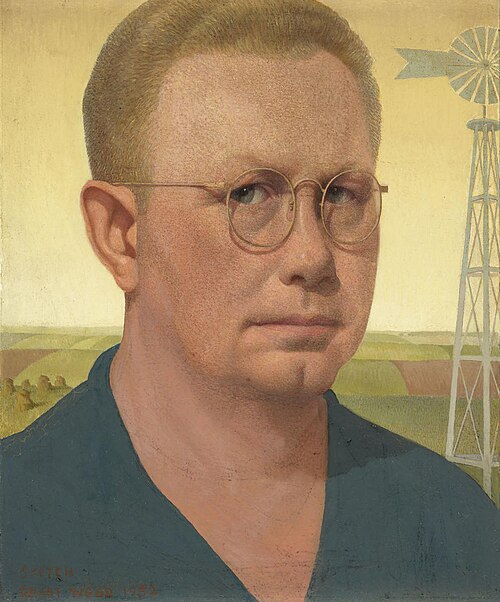
The eastern-Iowa painter whose “American Gothic” became one of the most famous — and most parodied — images in American art.
Grant DeVolson Wood was born in 1891 on a farm near Anamosa, Iowa, and grew up in Cedar Rapids. After study and travel in Europe, he turned away from Impressionism toward a crisp, rooted style celebrating the rural Midwest.
In 1930 he painted “American Gothic” — a stern farmer and his daughter before a white farmhouse — which won a prize at the Art Institute of Chicago and made him famous. He became a leader of the Regionalist movement and helped run a Depression-era artists' colony at Stone City.
Wood put Iowa on the map of American art, and “American Gothic” endures as a national symbol endlessly referenced in advertising and satire. The Cedar Rapids Museum of Art holds the world's largest collection of his work.
His restored studio and his boyhood region remain destinations for admirers of Iowa's most famous painter.
The eastern-Iowa painter whose “American Gothic” became one of the most famous — and most parodied — images in American art.
Grant Wood was from Anamosa, Iowa.
1891–1942.
Curious about your own family's story? We trace it through the public record and write it up as a documented history.
See how it works →This profile presents only publicly reported facts, drawn from the sources above. It is not affiliated with or endorsed by the family or its companies.
Portrait: Wikimedia Commons (public domain or freely licensed).